
Professional Color Control for Premium Card Printing
At CS Trading Card Factory, we understand that color accuracy is essential to every successful card project. Whether you are producing trading cards, playing cards, educational cards, oracle decks, or board game components, consistent color reproduction helps ensure your products look professional and meet customer expectations.
Our color management process combines file verification, prepress preparation, and production monitoring to achieve vibrant, consistent, and reliable print results from the first sheet to the final product.
While printed colors may vary slightly from what is displayed on a screen, our goal is to minimize those differences and deliver the closest possible match to your approved artwork.
Understanding RGB and CMYK
One of the most common concerns in commercial printing is the difference between screen colors and printed colors.
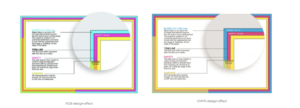
Digital devices such as computers, tablets, and mobile phones display colors using the RGB (Red, Green, Blue) color model. Printing presses use the CMYK (Cyan, Magenta, Yellow, Black) process, which creates colors through layers of ink rather than light.
Because RGB can display a wider range of colors than CMYK, some bright blues, greens, reds, and neon tones may appear less vibrant once printed.
To achieve the most predictable results, we recommend preparing artwork in CMYK before submission. This allows designers to preview colors more accurately and reduce unexpected color shifts during production.
Factors That Influence Print Color
Printed colors can be affected by:
- Screen calibration and monitor settings
- RGB to CMYK conversion
- Paper stock and surface texture
- Ink absorption characteristics
- Coatings and finishing effects
- Temperature and humidity during production
For this reason, no commercial printer can guarantee a 100% match between digital displays and printed products. However, our team follows strict production standards to maintain color consistency throughout every print run.
Black Color Setup
Black may seem simple, but different black settings can produce very different results in print.
Standard Black
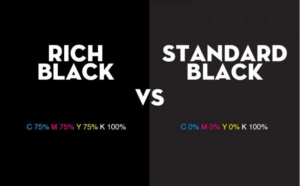
Standard Black uses only:
100% K
This option is recommended for:
- Small text
- Fine lines
- Detailed symbols
- QR codes
- Small graphic elements
Using a single printing plate helps maintain sharp edges and reduces the risk of registration issues.
Rich Black
Rich Black combines CMYK inks to create a deeper and more premium-looking black.
Recommended Rich Black:
C60 M40 Y40 K100
Rich Black is ideal for:
- Card backgrounds
- Large black areas
- Card backs
- Packaging designs
- Premium collector products
Compared to Standard Black, Rich Black appears darker, fuller, and more visually impressive.
Best Practice
For optimal results, use Standard Black for text and detailed artwork, while using Rich Black for larger black surfaces. This combination provides both clarity and visual depth.
White Ink for Special Materials
White ink is commonly used when printing on holographic cardstock, transparent materials, metallic surfaces, colored paper, or specialty substrates.
Unlike white paper, these materials can affect the appearance of printed colors. A white ink layer creates a neutral base beneath the artwork, allowing colors to appear brighter, more accurate, and more vibrant.
White ink can be used to:
- Enhance color brightness
- Increase opacity
- Create selective holographic effects
- Improve artwork visibility
- Add depth to premium card designs
For projects requiring white ink, a separate white ink layer should be supplied with the artwork. Our prepress team can also assist with white ink preparation if needed.

Image Resolution Requirements
High-resolution artwork is essential for producing sharp and professional printed products.
Recommended specifications:
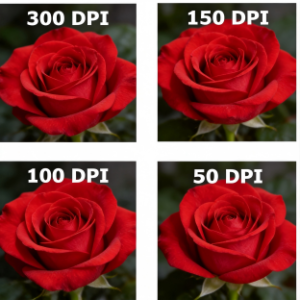
- Minimum Resolution: 300 DPI
- Preferred Resolution: 400–600 DPI
- Color Mode: CMYK
- Preferred Formats: AI, PSD, PDF, TIFF
Images below 300 DPI may appear soft, pixelated, or blurry after printing.
Important Notice
Resolution should be established before the design process begins.
Increasing a low-resolution image after it has already been created will not add real image detail and may still result in poor print quality.
For the best results, always use original high-resolution artwork whenever possible.
Artwork Inspection Process
Before production begins, every project is reviewed by our prepress specialists.
Our inspection process includes:
- Color mode verification
- Resolution checks
- Bleed and safety area inspection
- Font verification
- White ink layer review
- Special finish compatibility checks
- File structure verification
If any issues are identified, our team will contact you and provide recommendations before printing starts.
This additional review helps reduce production risks and ensures your files are ready for manufacturing.

Confidentiality & Copyright Protection
We respect the originality and ownership of every project entrusted to us.
All customer artwork, game concepts, illustrations, and production files remain the intellectual property of their respective owners.
For clients requiring additional protection, CS Trading Card Factory supports Confidential Disclosure Agreements (CDA) and Non-Disclosure Agreements (NDA).
Our confidentiality commitment includes:
- Protecting customer files and artwork
- Preventing unauthorized sharing of project information
- Restricting promotional use without permission
- Maintaining secure handling of production files
- Protecting project information throughout manufacturing
Your designs remain confidential throughout the entire production process.

Need Help Preparing Your Files?
Not sure if your artwork is ready for production?
Our engineering and prepress teams are available to review your files, answer technical questions, and provide recommendations before printing begins.
Contact CS Trading Card Factory today for a complimentary artwork review and color consultation.